- Licensed & Insured
- Free Estimates
- Mon–Fri, 8 AM – 6 PM
Serving Yonkers & Southern Westchester, NY

Chimney Repair in Yonkers, NY: Crowns, Flashing and Chimney Leaks
Brick Pointing Yonkers, NY repairs masonry chimneys on homes, multifamily buildings and storefronts. We trace each leak to its source, then fix the part that failed: the crown, cap, flashing, mortar joints or the brick itself. Every repair is checked with water before we leave. Estimates are free, and our crew is licensed and insured.
- Licensed & insured
- 10+ years on Yonkers rooftops
- Free estimates · Mon–Fri 8–6
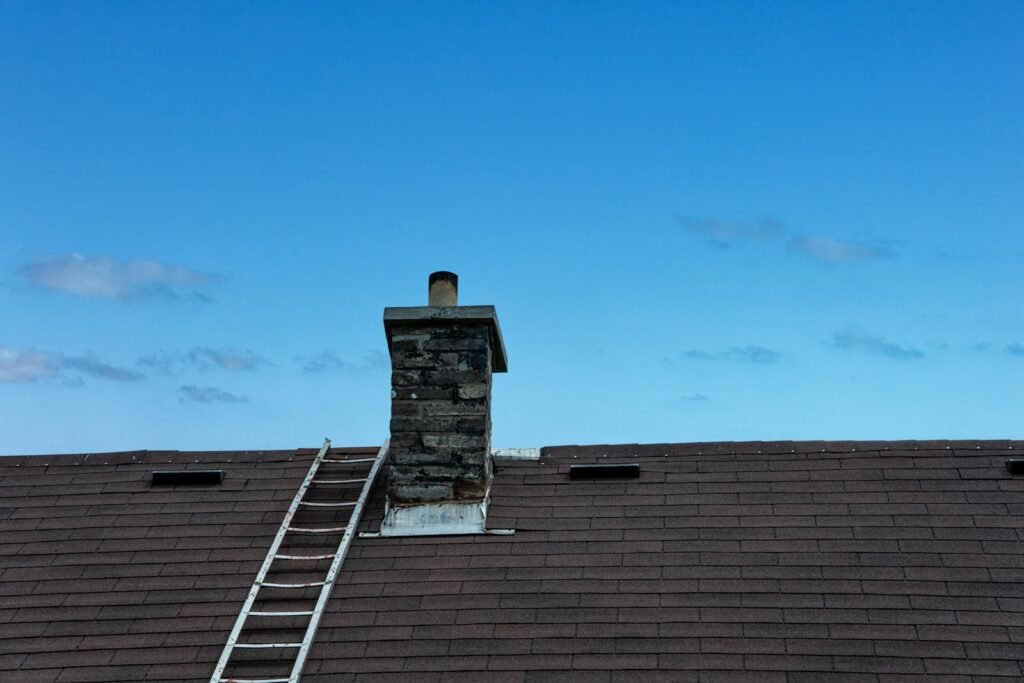
Every fix water-tested
We run water over the repair before we leave
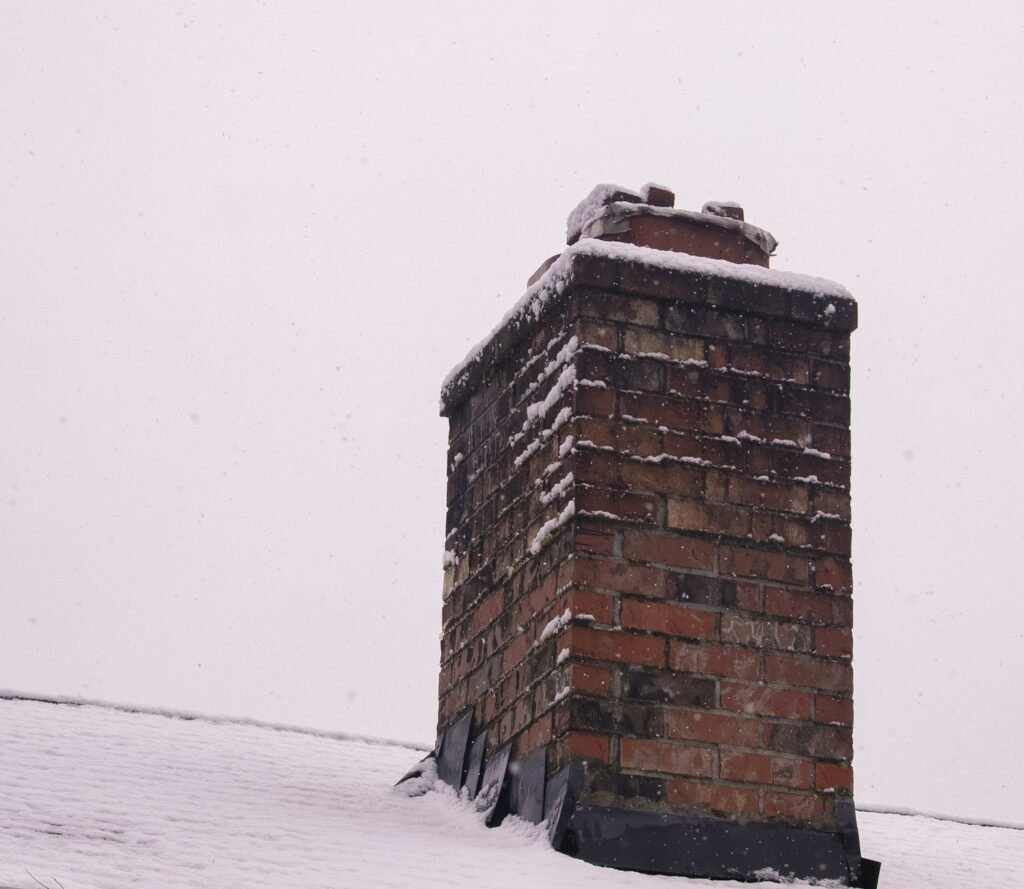
Read it from the top down
Water that gets past one part runs down to the next, so we check in this order.
Chimney Parts We Repair in Yonkers, Top to Bottom
A chimney is a stack of parts, and each one fails in its own way. Knowing which part failed is what makes a repair last.
1
Chimney cap
The metal hood over the flue. It keeps rain, snow, birds and animals out. A missing or rusted cap lets water straight down the inside.
2
Chimney crown
The slab that covers the top of the brick around the flue. It is the chimney’s roof, and the part we replace most often.
3
Crown-to-flue joint
Where the crown meets the clay flue tile. Without room to move here, the crown cracks as the flue heats and cools.
4
Brick and mortar joints
The stack above the roof takes weather on all four sides, so its joints wear faster than the walls below.
5
Counterflashing
Metal set into a mortar joint on the chimney that laps down over the roof flashing.
6
Base and step flashing
Metal pieces tied into the roofing that seal the gap between roof and chimney.
7
Cricket
A small peaked roof on the uphill side of wider chimneys that splits water and snow around them.
Chimney Leak Repair Finder: Match the Sign to the Cause
Most chimney leaks leave a clue. Find yours in the left column to see where the water is most likely getting in.
| What you see | Most likely cause | What we repair |
|---|---|---|
| Ceiling or wall stain next to the chimney after rain | Failed or loose flashing | Reset or replace step flashing and counterflashing |
| Water in the fireplace or a rusty damper | Missing cap or cracked crown | New cap; crown repair or a new crown |
| White crust on the outside brick | Water moving through the brick and joints | Fix the water source, then repoint |
| Flaking brick near the top of the stack | Crown runoff sheeting down the brick face | New crown with an overhang and drip edge; replace spalled brick |
| Damp attic only in wind-driven rain | Open mortar joints on the windward side | Chimney repointing |
| Leaks on the uphill side of a wide chimney | No cricket, or a cricket packed with debris | Add or rebuild the cricket and its flashing |
Beyond repair? If the chimney leans, has pulled away from the house, or has many loose bricks, repair is no longer enough. See chimney rebuilding.
Chimney Crown Repair in Yonkers, Done to Spec
Many chimneys we see do not have a true crown. They have a thin layer of mortar troweled over the top brick, often called a mortar wash, and a mortar wash does not have the strength to protect a chimney for long (NCSG Sweeping).
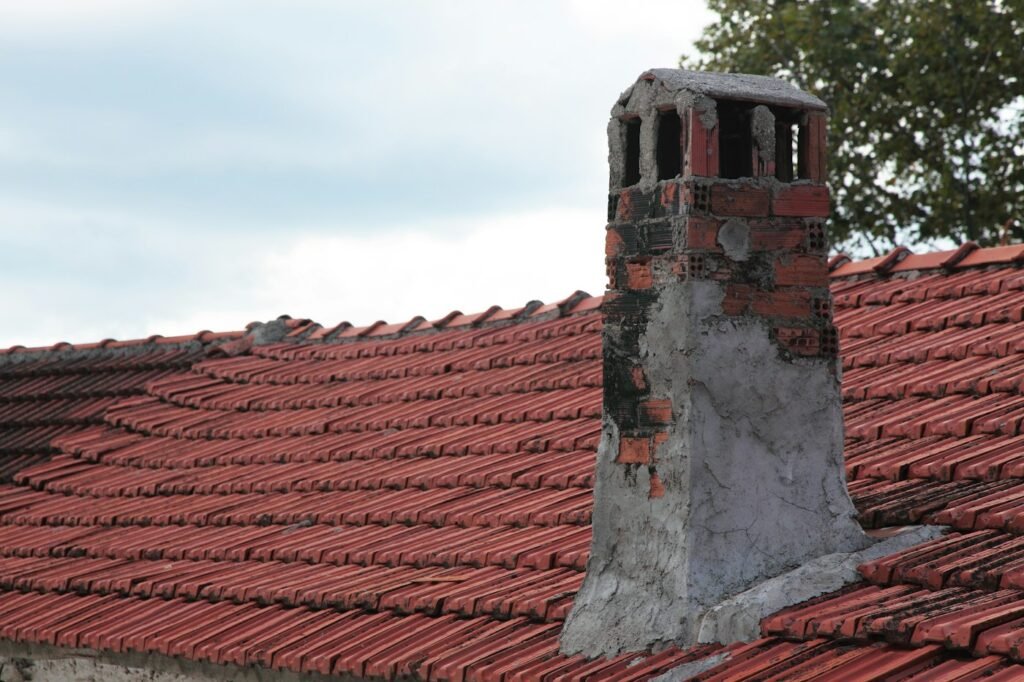
Mortar wash
- Thin mortar troweled flush with the brick
- No overhang, so runoff sheets down the brick face
- Cracks and lets water into the top of the stack
A proper concrete crown
- Concrete, not mortar. Cast-in-place or precast concrete (ASHI Reporter).
- At least 2 inches thick, even at the edge.
- An overhang of at least 2½ inches on every side, with a drip groove cut into the underside so water falls clear of the brick.
- Flashing under the crown that runs through the brick and turns up against the flue liner, with a drip at the outer face (MCAA).
- A gap at the flue tile, sealed with a flexible joint so the flue can move.
A sound crown with fine surface cracks can often be sealed with a crown repair coating. A broken crown, or a mortar wash, gets replaced.
Chimney Flashing Repair in Yonkers
Flashing leaks are the most common chimney leaks we find, and they often get blamed on the roof. Good chimney flashing has two layers. Base or step flashing ties into the roofing. Counterflashing is set into a groove cut in the chimney’s mortar joint and laps over the base flashing by at least 3 inches (ASHI Reporter).
Tar and caulk smeared over the joint is a patch, not flashing. We cut proper reglets, set new metal and seal it, and coordinate with your roofer when the roof is being replaced too.
Layer 2 · Counterflashing
Set into a reglet cut in the chimney’s mortar joint, lapping down at least 3 inches.
Layer 1 · Base and step flashing
Woven into each course of roofing along the sides and front of the chimney.
Tar and caulk over the joint is a patch, not flashing.
Our Chimney Repair Services in Yonkers
We repair the masonry parts of the chimney, from the cap down to the roof line.
Crown repair and new crowns
Crack sealing for sound crowns, new cast concrete crowns for failed ones.
Chimney caps
New stainless or copper caps sized to each flue.
Flashing and crickets
Step flashing, counterflashing and crickets on wider chimneys.
Flues and liners
Flue cleaning and liners are a certified chimney sweep’s work. We do the masonry and work alongside yours.
How a Chimney Repair Visit Works in Yonkers
From the first climb to the last photo, a Yonkers chimney repair follows the same seven steps.
Step 1
Roof inspection
We photograph every side and the top, and check the attic.
Step 2
Leak source
We match stains and damage to the part causing them.
Step 3
Written estimate
Photos, the repair list and the price, free.
Step 4
Roof protection
Shingles and gutters protected, safe roof access set.
Step 5
Repair
Crown, cap, flashing, joints and brick, top down.
Step 6
Water test
Water run over the repair to check the fix.
Step 7
Photo report
Before and after photos of work you cannot see.
Check Your Chimney From the Ground
You can spot most chimney problems with binoculars from the yard or street. Go down this list:
- Is there a cap on every flue?
- Does the top have a slab that sticks out past the brick, or is it flush?
- Are there gaps, missing mortar or loose bricks near the top?
- Do you see white streaks or rust stains running down the brick?
- Is the metal at the roof line lifted, bent or covered in tar?
- Does the chimney look straight next to the corner of the house?
Ticked any of these?
Send us a photo of your chimney. We will tell you whether it needs work now or can wait.
What Affects the Scope of a Chimney Repair in Yonkers
We price after the inspection, and the estimate is free. A single flashing reset and a new crown with repointing are very different jobs, and these six things decide where yours lands.
01
Roof pitch, height and how hard the chimney is to reach
02
Number of flues and the size of the chimney
03
Crown sealing vs a new cast concrete crown
04
Flashing reset vs full replacement, and whether a cricket is needed
05
Amount of repointing and brick replacement
06
Timing with roof replacement or chimney sweep work
Chimney Repair for Yonkers Homes, Multifamily Buildings and Storefronts
Homes
Fireplace and furnace chimneys on single-family and two-family houses, reached from ladders and roof brackets with the shingles protected.
Multifamily buildings
Tall boiler chimneys and multi-flue stacks on walk-ups and apartment buildings, repaired with roof-safe access.
Storefronts
Chimneys on older mixed-use buildings, often reached from a flat roof behind a parapet, with the shop kept open below.
Chapter 58
Yonkers Housing and Building Maintenance Code, applying New York’s property maintenance rules citywide.
Chimney Upkeep and Yonkers’ Building Maintenance Code
Yonkers’ Housing and Building Maintenance Code applies New York’s Uniform Code property maintenance rules across the city (Yonkers City Code, Ch. 58). New York’s property maintenance code is based on the 2018 International Property Maintenance Code (BNi), which requires chimneys to be kept structurally safe and in good repair.
For landlords and building owners, a loose chimney top is a safety issue as well as a leak. Regular repair keeps it from becoming both.
Also serving: Mount Vernon, New Rochelle, Bronxville, Hastings-on-Hudson and Scarsdale.
Related Masonry Services in Yonkers
When a chimney needs more than a repair, or the problem is next to it, these are the services to look at.
When a chimney leans or has failed above the roof.
Spalled chimney brick replaced with a matched unit.
For walls and chimneys that keep taking water.
For chimneys rising from flat roofs behind a parapet.
Chimney Repair FAQs for Yonkers Homeowners and Buildings
What is the difference between a chimney crown and a chimney cap?
The crown is the concrete slab covering the top of the brick. The cap is the metal hood over the flue opening. The crown protects the masonry; the cap keeps rain and animals out of the flue. Most chimneys need both.
Why does my chimney leak only in heavy rain or wind?
Wind-driven rain finds gaps that light rain does not: open joints on the windward face, loose counterflashing or a cracked crown. We check the side that faces the weather first.
Can a cracked chimney crown be repaired?
Fine surface cracks in a sound concrete crown can be sealed. A crown that is broken, thin, flush with the brick or made of mortar should be replaced with a new concrete crown.
Do you repair chimneys that are no longer in use?
Yes. An unused chimney still takes the weather. We can repair it and cap or seal the top, so it stops letting water into the house.
Should chimney flashing be replaced when I get a new roof?
It is the best time. Old flashing often fails before new shingles do. We coordinate with your roofer so the new roofing and new flashing tie together.
Do you clean or reline chimney flues?
No. Flue cleaning and liners are a chimney sweep’s work. We handle the masonry and work alongside your sweep when both are needed.
Is it safe to use my fireplace if the chimney is damaged?
If bricks are loose, the crown is broken or you see cracks inside the firebox, stop using it until it has been inspected. A damaged chimney can let heat and gases reach places they should not.
Get a Free Chimney Repair Estimate in Yonkers
Send a photo of your chimney or tell us where the water shows up. We will inspect it, show you what we find and give you a written estimate.