- Licensed & Insured
- Free Estimates
- Mon–Fri, 8 AM – 6 PM
Serving Yonkers & Southern Westchester, NY

Brick Steps and Stoop Repair in Yonkers, NY
Brick Pointing Yonkers, NY repairs and rebuilds brick steps and stoops for homes, multifamily buildings and storefronts. We reset loose bricks and treads, fix uneven steps, re-anchor railing posts and rebuild stoops that have settled or pulled away from the house. The goal is simple: steps that look right and feel solid underfoot.
- Licensed & insured
- 10+ years in Yonkers
- Free estimates · Mon–Fri 8–6
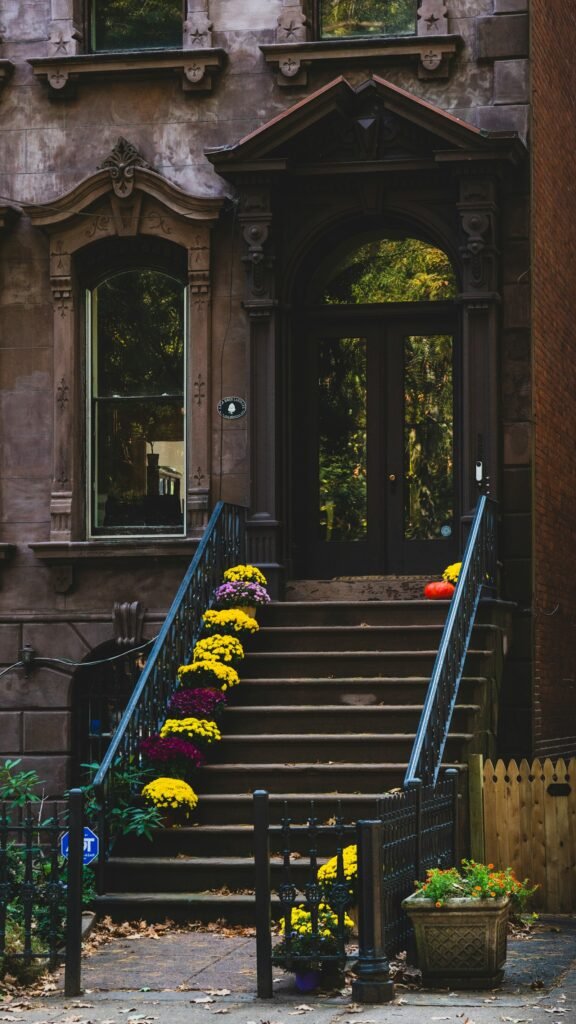
Every riser measured
Steps reset to an even, comfortable rhythm
Brick Stoop Parts and What Goes Wrong With Each One
A stoop is more than a stack of steps. Seven parts work together, and the part that failed decides the repair.
6
Landing
4
Tread + nosing
3
Riser
2
Cheek wall
1
Footing, below the ground line
1
Footing: the base the stoop sits on. When it settles, the whole stoop tips or pulls away from the house.
2
Cheek walls: the side walls that hold the steps in. They crack and bulge when water gets behind them.
3
Risers: the upright face of each step. Loose or missing brick here is the first sign of trouble.
4
Treads: the surface you step on, in brick, bluestone, limestone or concrete. Treads rock when the mortar under them fails.
5
Nosing: the front edge of each tread. Chipped or crumbling nosings are a common trip point.
6
Landing: the platform at the door. It takes standing water and often cracks first.
7
Railing posts: steel posts set into the masonry. When they rust, they split the brick or stone around them.
Signs Your Brick Steps in Yonkers Need Repair
Most stoop problems announce themselves underfoot before they show up as broken brick. If you notice any of these, the steps need a closer look.
Treads or bricks that rock or shift when you step on them
Steps of different heights, so people catch a toe
A gap opening between the stoop and the house wall
Cracked, tilted or sunken treads that hold water
Crumbling cheek walls or loose cap stones on the sides
Rust stains and cracks around railing posts
A hollow sound under the treads when tapped
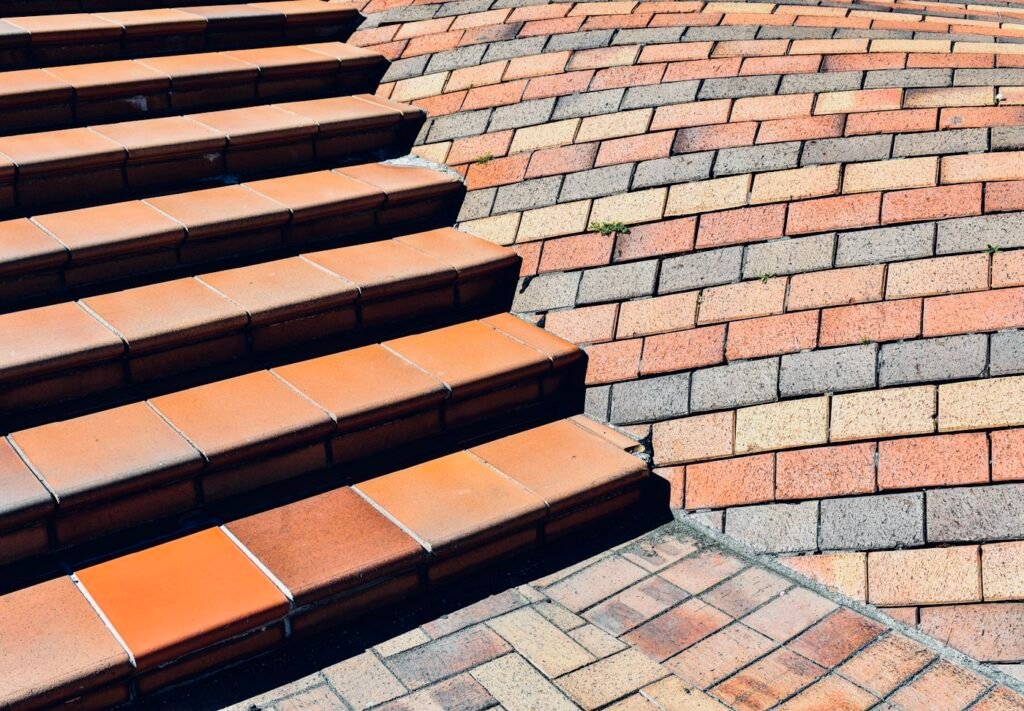
Brick Step Safety Numbers for Yonkers Homes
Uneven steps are one of the easiest hazards to fix. For homes, New York’s residential code sets a maximum riser height of 8¼ inches and a minimum tread depth of 9 inches (NY Department of State technical bulletin). The model code also limits the difference between the tallest and shortest riser in a flight to ⅜ inch, and calls for a handrail on stairs with four or more risers (Jaspector, IRC R311.7).
8¼″
max riser
tallest a home step should be
9″
min tread
shallowest depth for a safe footing
⅜″
max variation
between the tallest and shortest riser
4+
risers
need a handrail on the flight
When we repair or rebuild steps, we measure every riser and tread and bring them back into an even, comfortable rhythm.
Three Levels of Brick Stoop Repair in Yonkers: Repair, Resurface or Rebuild
We start at the lowest level that will last, and explain why if we recommend more.
1. Repair
Reset loose bricks and treads, repoint joints, replace cracked units and re-anchor railing posts. For stoops with a sound base that has not moved.
2. Resurface
Keep the sound structure and add new treads, often bluestone caps over brick, plus a rebuilt landing. For worn surfaces on a solid stoop.
3. Rebuild
Take the stoop down to its footing, fix the base and build it back with even risers and treads. For stoops that have settled, separated from the house or crumbled through.
Tread Materials for Brick Steps and Stoops in Yonkers
The tread is the part you see and stand on, so it sets both the look and the grip of the steps.
| Tread | Look | Good to know |
|---|---|---|
| Brick | Matches brick walls and stoops | Uses paving-grade brick on top, set with a slight pitch to shed water |
| Bluestone | Classic slab on older Yonkers stoops | Large pieces with few joints; edges can be thermal-finished for grip |
| Limestone or granite | Formal and heavy | Very durable, and often reused from the original stoop |
| Concrete caps | Plain and uniform | Cast to size; good for full rebuilds on a budget |
On stone steps, joints are filled with mortar suited to the stone; see stone repointing. On older soft brick stoops, a softer mix protects the brick; see lime mortar repointing.
Brick Step and Stoop Repair in Yonkers: Base, Treads, Railings and Pointing
Eight steps, from the tape measure to the final walk-through. Like the stoop itself, each one builds on the last.
1. Measure and inspect
Every riser, tread and landing is measured; we check the footing and the joint at the house wall.
2. Plan access
For multifamily buildings and shops, we plan a safe way in and out while the steps are worked on.
3. Remove loose work
Failed bricks, treads and mortar come off; sound pieces are saved for reuse.
4. Fix the base
Settled or hollow areas are packed solid, or the stoop goes down to its footing for a rebuild.
5. Set treads and risers
Units are bedded fully, with even heights and a slight forward pitch so water runs off.
6. Re-anchor railings
Rusted post sockets are cleaned out or re-drilled, and posts are set in non-shrink grout.
7. Point and cure
Joints are filled and tooled; the steps are roped off while the mortar gains strength.
8. Walk-through
We check every step with you before we leave.
Railing Post Repair in Brick Steps and Stoops
A railing post is often what breaks a stoop apart. Water runs down the post, rusts the steel inside the masonry and the swelling rust cracks the tread or cheek wall around it.
We cut out the damaged masonry, clean or replace the post base, and set it in grout that does not shrink, sloped so water drains away from the post. If the railing itself needs work, we coordinate with an ironworker.
How we reset a rusted post
- Cut out the cracked brick or stone around the post
- Clean or replace the rusted post base
- Set the post in non-shrink grout
- Slope the top so water runs away from the steel
What Affects the Scope of Steps and Stoop Repair in Yonkers
We price after measuring the steps, and the estimate is free. These six things set the size of the job.
Number of steps, width and landing size
Repair, resurface or full rebuild
Tread material, and how much can be reused
Footing condition and any settlement
Railing posts to re-anchor
Access for tenants or customers during work
Brick Steps and Stoop Repair for Yonkers Homes, Multifamily Buildings and Storefronts
Most common
Homes
Front stoops, side and back steps, porch steps and garden steps, with the yard and plantings protected while we work.
Staged work
Multifamily buildings
Wide entry stoops used by many tenants every day, scheduled in stages so the entrance stays open.
Around hours
Storefronts
Short runs of steps and landings at shop doors, repaired around opening hours so customers can still get in.
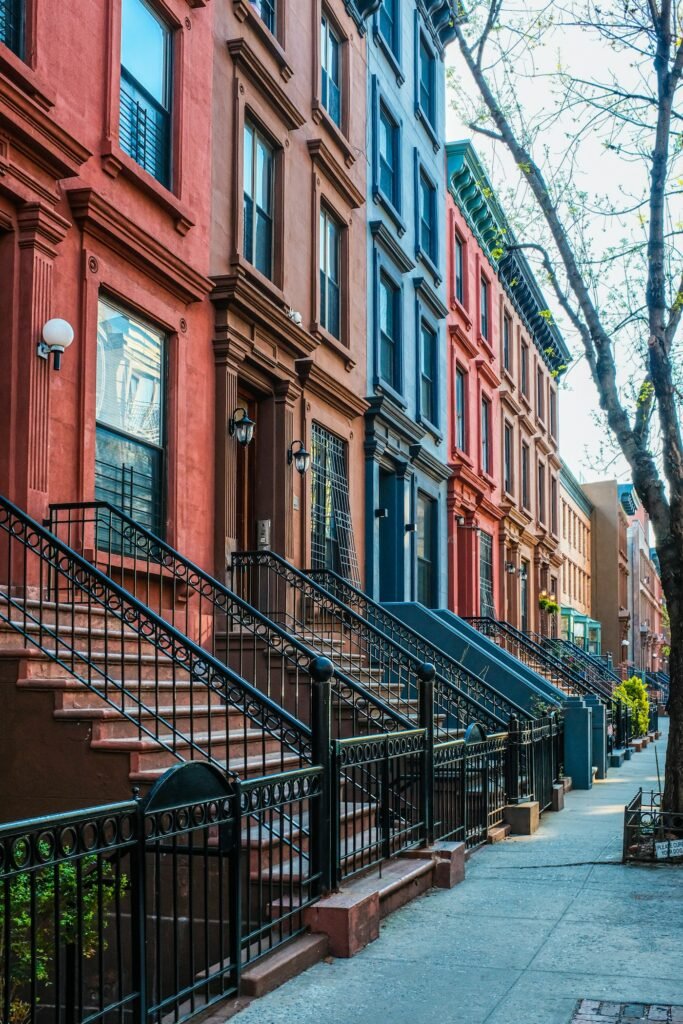
Brick Steps and Stoops in Yonkers, the City of Seven Hills
Yonkers is known as the City of Seven Hills (Wikipedia). On hillside streets, many houses sit above the sidewalk, so a front stoop can run many steps high, with side walls holding back the slope.
Longer flights carry more weight, take more water and show uneven risers more. That is why we measure every step, not just the broken ones.
Park Hill
Nodine Hill
Ridge Hill
Cross Hill
Locust Hill
Glen Hill
Church Hill
Also serving: Mount Vernon, New Rochelle, Bronxville, Hastings-on-Hudson and Scarsdale.
Related Masonry Services for Stoops, Walls and Walkways in Yonkers
Steps rarely fail alone. These services cover the masonry around them.
Spalled bricks on risers and cheek walls, swapped for matched units.
Cracked masonry around the stoop and the house wall.
Bluestone and stone steps with open or washed-out joints.
Garden steps cut through a sloped yard and the walls beside them.
Brick Steps and Stoop Repair FAQs for Yonkers Homeowners
Can loose bricks on my steps be reset, or does the stoop need rebuilding?
If the base is solid and the stoop has not moved, loose bricks and treads can be reset. If the stoop has settled, tilted or pulled away from the house, the base needs fixing, which usually means a rebuild.
Why are my steps pulling away from the house?
A stoop usually sits on its own footing, separate from the house. When that footing settles or the soil under it washes out, the stoop tips away and a gap opens at the wall.
Can my brick steps be covered with bluestone treads?
Yes, if the brick stoop underneath is sound. Bluestone caps give a long-lasting surface with fewer joints. We check that the step heights still work with the added thickness.
How soon can we use the steps after the repair?
We rope them off while the mortar sets and tell you when light foot traffic is fine. For multifamily and shop entrances we stage the work so one side or an alternate entry stays open.
Do you fix railing posts set into the steps?
Yes. We cut out cracked masonry around the post, clean or replace the post base and set it in non-shrink grout so water does not collect around it.
My steps are not broken, but people keep tripping. Why?
The steps are probably uneven. Even a small difference in riser height breaks people’s rhythm on the stairs. We measure each step and reset the treads to even heights.
Get a Free Steps and Stoop Repair Estimate in Yonkers
Send a photo of your steps or call us. We will measure them and tell you whether they need a repair, new treads or a rebuild.